
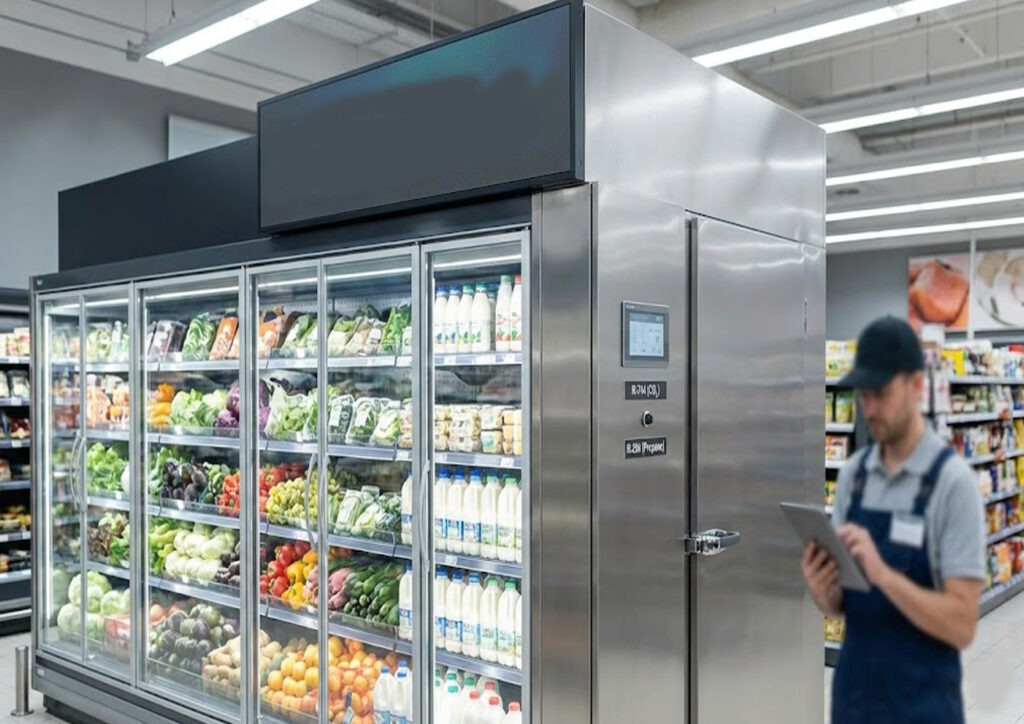
As environmental regulations tighten and businesses focus more on sustainability, many grocery stores, restaurants, and food service operators are asking the same question: Should we switch to natural refrigerants?
Natural refrigerants like CO₂ (R-744), ammonia (R-717), and hydrocarbons (R-290, R-600a) are becoming increasingly popular as eco-friendly alternatives to synthetic refrigerants such as HFCs and HCFCs. But are they the right choice for your business?
AtBuffo’s Refrigeration, we help companies across Nevada understand their refrigeration options, choose the best solutions for their operations, and stay compliant with evolving environmental standards.
What Are Natural Refrigerants?
Natural refrigerants are substances that occur naturally in the environment and can be used as cooling agents without harming the ozone layer or significantly contributing to global warming.
The most common natural refrigerants include:
- CO₂ (R-744) – Non-toxic, non-flammable, and extremely low in global warming potential (GWP).
- Ammonia (R-717) – Highly efficient with zero GWP, commonly used in industrial systems.
- Hydrocarbons (R-290 propane, R-600a isobutane) – Energy-efficient and environmentally safe, ideal for smaller systems.
These refrigerants have gained attention as sustainable alternatives to traditional synthetic refrigerants like R-404A, R-134a, and R-410A, which are being phased down under EPA and global F-Gas regulations.
The Benefits of Switching to Natural Refrigerants
1. Environmental Sustainability
Natural refrigerants have ultra-low or zero global warming potential, making them the most climate-friendly choice available. For example, CO₂ (R-744) has a GWP of just 1 — compared to over 3,900 for R-404A. Switching helps your business reduce emissions and meet environmental compliance goals.
2. Energy Efficiency
When properly designed and installed, natural refrigerant systems can offer equal or better energy efficiency than conventional systems. CO₂ systems perform especially well in cooler climates like Minnesota, where ambient conditions improve system efficiency.
3. Long-Term Regulatory Compliance
The EPA and international agreements such as the Kigali Amendment are phasing down the use of high-GWP refrigerants. By transitioning early to natural refrigerants, your business avoids future regulatory restrictions and potential retrofit costs.
4. Cost Savings Over Time
While installation costs for natural refrigerant systems can be higher initially, the long-term savings from lower energy use, reduced maintenance, and regulatory stability often outweigh the upfront investment.
5. Brand and Sustainability Reputation
Businesses that invest in green technology build stronger reputations with environmentally conscious consumers. Adopting natural refrigerants can help your company demonstrate a genuine commitment to sustainability.
Considerations Before Switching
Natural refrigerants offer clear advantages, but they’re not one-size-fits-all. Before making the switch, consider:
System Compatibility
Existing systems designed for HFCs may not be compatible with natural refrigerants. Retrofitting often requires new components or full system replacement.
Safety Requirements
Some natural refrigerants, like ammonia or hydrocarbons, require additional safety measures due to toxicity or flammability. Systems must be installed and serviced by qualified professionals.
Upfront Costs
Natural refrigerant systems can have higher initial costs due to specialized equipment and installation requirements. However, these costs are offset over time by lower energy bills and compliance benefits.
Maintenance and Training
Natural refrigerant systems require technicians trained in handling these substances safely and efficiently. Buffo’s Refrigeration technicians are EPA-certified and experienced with both synthetic and natural refrigerant systems.
Is a Natural Refrigerant Right for You?
The best refrigerant solution depends on your facility type, system age, and long-term goals. For many grocery stores, food processors, and cold storage facilities, CO₂ systems are becoming the standard due to their safety, performance, and sustainability.
Buffo’s Refrigeration can assess your existing equipment, analyze energy performance, and recommend whether a transition to natural refrigerants is right for your business — or whether a low-GWP synthetic retrofit would be more practical in the short term.
FAQ: Switching to Natural Refrigerants
Are natural refrigerants more expensive?
Initial system costs are higher, but energy efficiency and compliance savings typically make them more affordable long-term.
Can existing systems be converted to natural refrigerants?
In some cases, yes — but many systems require upgrades or replacements to ensure safety and compatibility.
Which natural refrigerant is best for my business?
It depends on your application. CO₂ is ideal for grocery and retail systems, ammonia works well in industrial settings, and hydrocarbons suit small or self-contained units.
Start Your Refrigerant Transition Today
Thinking about switching to natural refrigerants? Contact Buffo’s Refrigeration today to schedule a consultation and learn how to make your refrigeration system more efficient, sustainable, and future-ready.
We proudly serve Nevada, providing expert commercial refrigeration installation, maintenance, and retrofit services for grocery stores, restaurants, and food service facilities.
📞Call Us For A Free Quote 775-782-8204 | Buffos-Refrigeration.com