
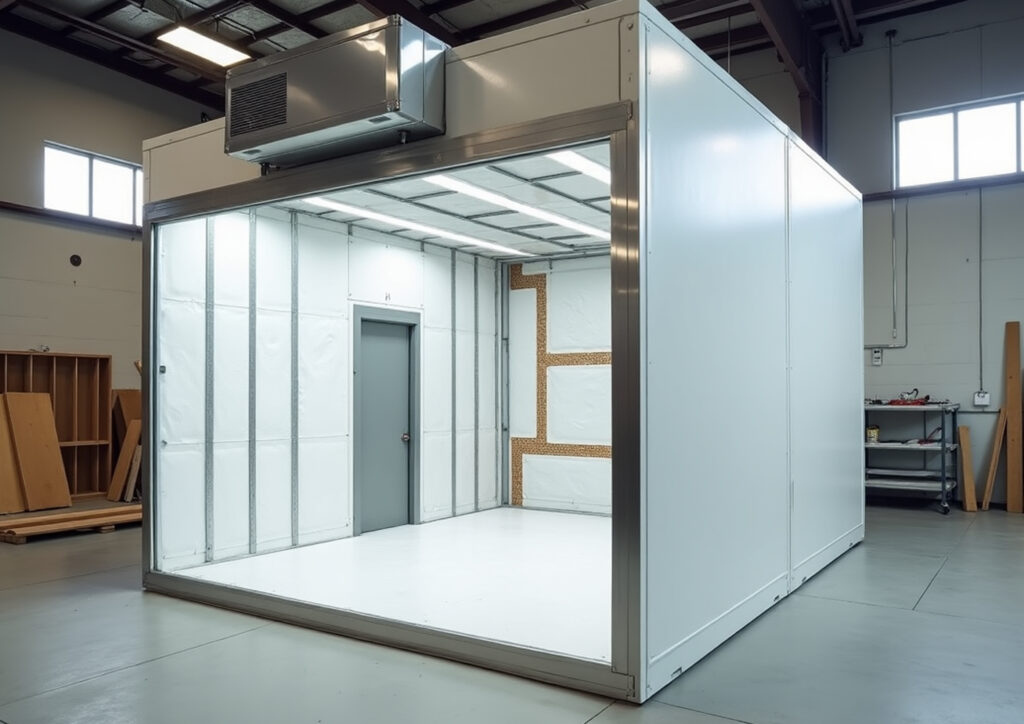
How big should your walk-in cooler be? This is one of the most important questions restaurant owners, grocery stores, convenience stores, and food service operators ask when planning new construction or upgrading refrigeration. Choosing the correct size directly impacts energy efficiency, workflow, food safety, and long-term operating costs.
In Nevada’s extreme heat, selecting the right walk-in cooler size is especially critical. An undersized unit can overwork the compressor and lead to emergency refrigeration repair, while an oversized cooler can waste energy and increase expenses.
Start with Your Inventory Volume
The first factor in determining walk-in cooler size is how much product you need to store.
Consider:
- Average weekly inventory
- Bulk purchasing habits
- Delivery frequency
- Seasonal fluctuations
- Menu expansion plans
High-volume restaurants and grocery stores typically require larger walk-in coolers, while smaller cafés or limited-service kitchens may need more compact systems.
Consider Your Available Space
Your building layout will influence cooler dimensions. Walk-in coolers come in many standard and custom sizes, but you must account for:
- Floor space
- Ceiling height
- Door clearance
- Workflow efficiency
- Ventilation requirements
Proper placement also ensures adequate airflow around the condenser unit, which is essential for commercial refrigeration performance in Nevada’s hot climate.
Allow for Proper Airflow and Organization
A common mistake is choosing a cooler that barely fits your current needs. Overcrowding blocks airflow and causes temperature inconsistencies.
Plan for:
- Shelving space
- Product rotation
- Employee movement inside the cooler
- Air circulation around stored items
Adequate spacing improves cooling efficiency and reduces strain on the refrigeration system.
Typical Walk-In Cooler Size Guidelines
While every business is different, general recommendations include:
- Small café or coffee shop: 6′ x 6′ to 6′ x 8′
- Medium restaurant: 8′ x 10′ to 10′ x 12′
- Large restaurant or grocery store: 10′ x 12′ or larger
- Food distribution or warehouse: Custom-sized systems
A professional commercial refrigeration service provider can calculate the correct size based on load requirements.
Think About Future Growth
When deciding how big your walk-in cooler should be, consider long-term plans.
Ask yourself:
- Will your menu expand?
- Are you planning to increase seating capacity?
- Will you purchase inventory in larger quantities?
- Do you anticipate higher seasonal demand?
Planning for growth now can prevent costly renovations or additional walk-in cooler installation later.
Energy Efficiency and Climate Considerations
In Nevada’s extreme summer temperatures, properly sized refrigeration systems perform more efficiently.
An undersized cooler may:
- Run continuously
- Overheat the compressor
- Increase energy bills
- Require frequent walk-in cooler repair
An oversized cooler may:
- Short cycle
- Waste electricity
- Increase upfront installation costs
Professional sizing ensures the system balances capacity and efficiency.
Don’t Forget Door Placement and Traffic Flow
The size of your cooler should support operational efficiency.
Consider:
- How often staff enter and exit
- Proximity to prep stations
- Door swing direction
- Self-closing mechanisms
- Strip curtains or air curtains
Frequent door openings can raise internal temperatures, so proper design helps maintain consistency.
The Importance of Professional Sizing
Improperly sized walk-in coolers are one of the most common causes of commercial refrigeration issues. Working with experienced professionals ensures:
- Accurate load calculations
- Proper insulation recommendations
- Correct compressor sizing
- Efficient layout planning
- Code compliance
Routine commercial refrigeration maintenance also keeps your system running efficiently once installed.
Frequently Asked Questions
Can a walk-in cooler be too big?
Yes. Oversized systems can waste energy and increase operational costs if not properly matched to your needs.
What happens if my cooler is too small?
An undersized unit may struggle to maintain temperature, leading to higher energy bills, food spoilage, and emergency refrigeration repair.
How tall should a walk-in cooler be?
Most standard units are about 7–8 feet tall, but custom heights are available depending on ceiling clearance.
How long does a walk-in cooler last?
With proper installation and maintenance, most walk-in coolers last 15 years or longer.
Schedule Service Today
Choosing the right walk-in cooler size protects your inventory, improves efficiency, and reduces long-term costs. Proper design and installation are essential for reliable performance in Nevada’s demanding climate.
Buffo’s Refrigeration provides expert walk-in cooler installation, commercial refrigeration service, preventative maintenance, walk-in freezer service, and emergency refrigeration repair throughout Nevada and surrounding areas. Our experienced technicians help businesses select and maintain systems built for long-term performance.
📞Call Us For A Free Quote 775-782-8204 | Buffos-Refrigeration.com