Keeping food storage compliant with FDA guidelines is critical for restaurants, grocery stores, convenience stores, warehouses, and food service operators. Proper refrigeration and temperature control protect customers, prevent costly inventory loss, and ensure your business avoids violations or fines.
In Nevada’s extreme heat, maintaining consistent cold storage temperatures can be even more challenging. Reliable commercial refrigeration systems and routine maintenance play a major role in staying compliant year-round.
Why FDA Food Storage Compliance Matters
The U.S. Food and Drug Administration (FDA) establishes food safety standards through the Food Code. These guidelines are designed to:
- Prevent foodborne illness
- Maintain proper temperature control
- Ensure safe storage practices
- Reduce contamination risks
- Protect public health
Failing to meet FDA standards can result in:
- Health department violations
- Fines and penalties
- Temporary closures
- Damage to your business reputation
Proper commercial refrigeration service is one of the most important factors in meeting compliance requirements.
Key Temperature Requirements
Maintaining correct temperatures is the foundation of food safety.
General FDA temperature guidelines include:
- Refrigerated foods: 41°F or below
- Frozen foods: 0°F or below
- Hot holding: 135°F or above
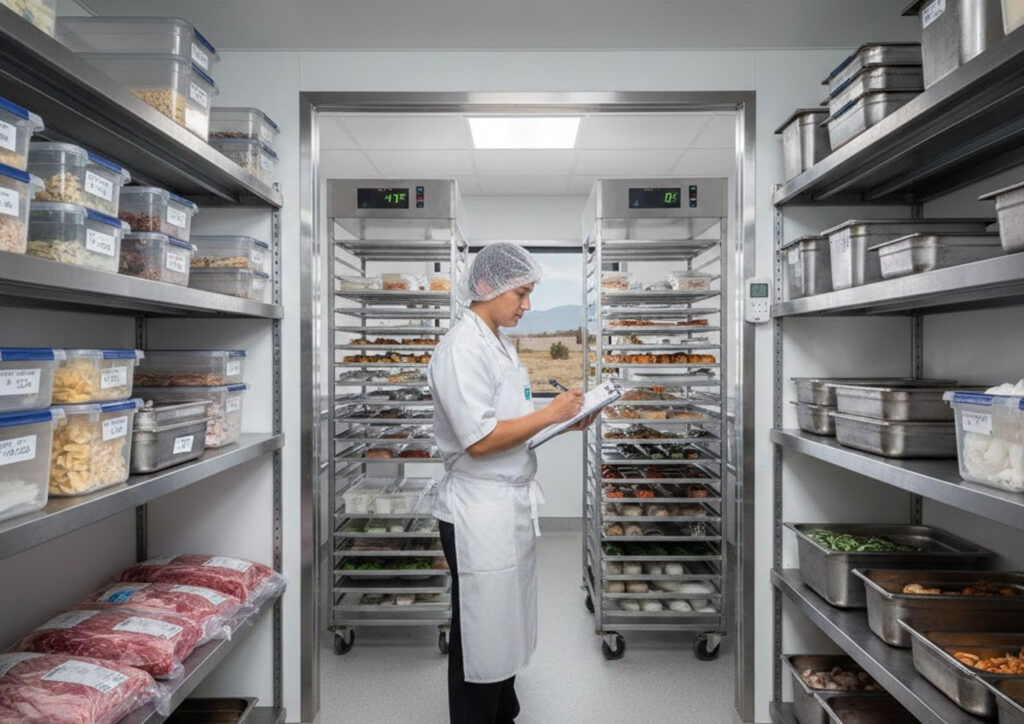
Walk-in coolers and walk-in freezers must consistently maintain these temperatures. Even minor fluctuations can put your business at risk.
Routine walk-in cooler repair and walk-in freezer service help prevent temperature instability.
Preventing Temperature Fluctuations
Temperature inconsistencies are one of the most common compliance issues.
Causes can include:
- Dirty condenser coils
- Refrigerant leaks
- Faulty thermostats
- Worn door gaskets
- Blocked airflow
- Overloaded storage
In Nevada’s hot climate, compressors work harder, increasing the likelihood of breakdowns. Preventative commercial refrigeration maintenance reduces the risk of unexpected failures.
Proper Food Storage Organization
Compliance is not only about temperature — organization matters too.
Best practices include:
- Store raw meats below ready-to-eat foods
- Label and date all stored items
- Follow FIFO (First In, First Out) rotation
- Avoid overcrowding shelves
- Keep food off the floor
- Maintain clear airflow inside coolers
Proper layout improves cooling efficiency and reduces contamination risk.
Monitoring and Documentation
Many health inspections require documentation of temperature monitoring.
Consider implementing:
- Digital temperature monitoring systems
- Daily temperature logs
- Alarm systems for temperature spikes
- Remote monitoring capabilities
Accurate records demonstrate compliance and help identify issues early.
The Role of Preventative Maintenance
Routine commercial refrigeration service supports FDA compliance by ensuring:
- Accurate thermostat calibration
- Proper refrigerant levels
- Clean condenser and evaporator coils
- Fully functioning defrost systems
- Tight door seals
Regular inspections help detect minor issues before they lead to emergency refrigeration repair or food spoilage.
HVAC and Food Safety
Proper HVAC performance also contributes to food safety by:
- Regulating indoor temperatures
- Controlling humidity
- Supporting ventilation
- Reducing strain on refrigeration equipment
Balanced airflow is especially important in high-heat environments like Nevada.
Common Compliance Mistakes to Avoid
Businesses often fall out of compliance due to:
- Infrequent equipment maintenance
- Ignoring minor temperature fluctuations
- Delayed repairs
- Inaccurate thermometers
- Poor staff training
- Overloading refrigeration units
Addressing these issues proactively helps avoid citations and operational disruptions.
Frequently Asked Questions
How often should refrigeration equipment be inspected?
Commercial refrigeration systems should be professionally serviced at least twice per year. In Nevada’s high-heat climate, quarterly maintenance is recommended.
What happens if my cooler exceeds 41°F?
Food may enter the temperature danger zone, increasing the risk of bacterial growth and potential health violations.
Can maintenance help prevent FDA violations?
Yes. Regular commercial refrigeration maintenance reduces the risk of temperature inconsistencies and equipment failures.
Are digital temperature monitors required?
While not always required, digital monitoring systems improve accuracy and simplify compliance documentation.
Schedule Service Today
Keeping food storage compliant with FDA guidelines requires reliable refrigeration, accurate temperature control, and proactive maintenance. Protect your business, your customers, and your reputation with dependable service.
Buffo’s Refrigeration provides expert commercial refrigeration service, walk-in cooler repair, walk-in freezer service, preventative maintenance programs, HVAC service, and 24/7 emergency refrigeration repair throughout Nevada and surrounding areas. Our experienced technicians help businesses maintain compliance and operate confidently in Nevada’s demanding climate.
📞Call Us For A Free Quote 775-782-8204 | Buffos-Refrigeration.com