Winter brings a different set of challenges for commercial HVAC and refrigeration systems. For restaurants, grocery stores, warehouses, and food service facilities, cold weather can be just as disruptive as summer heat — especially when heating systems and walk-in coolers must operate side by side.
Freezing temperatures, snow, and rapid weather shifts can impact performance, efficiency, and equipment lifespan. Without proper commercial refrigeration maintenance and HVAC service, small winter issues can quickly become expensive repairs.
Here are the most common winter HVAC and cooler problems — and how to prevent them.
Frozen Condenser Coils
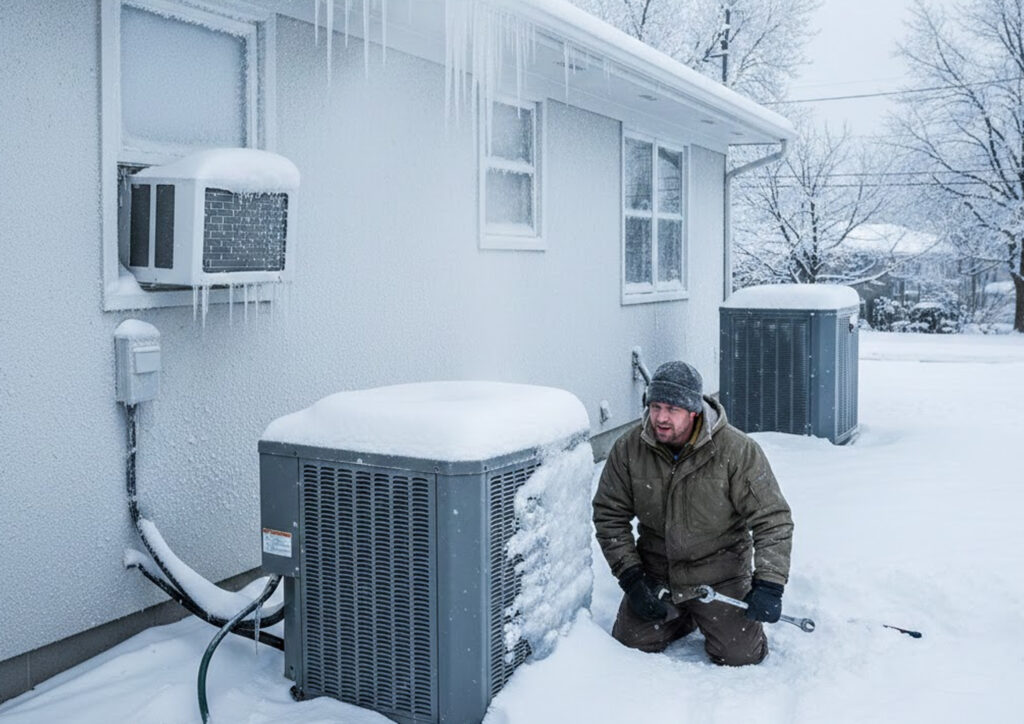
While condensers are designed to release heat, extreme cold combined with moisture can cause frost buildup on outdoor units.
This can lead to:
- Restricted airflow
- Increased system pressure
- Inefficient operation
- Compressor strain
Regular commercial refrigeration service ensures coils remain clean and free from ice accumulation.
HVAC Short Cycling
Cold temperatures force commercial HVAC systems to run more frequently. If thermostats are improperly calibrated or airflow is restricted, systems may short cycle.
Short cycling can cause:
- Increased energy consumption
- Uneven heating
- Premature wear on components
- Higher repair frequency
Routine HVAC inspections during winter reduce strain and maintain consistent indoor comfort.
Walk-In Cooler Temperature Fluctuations
It may seem counterintuitive, but winter weather can negatively impact walk-in cooler performance.
Common issues include:
- Thermostat miscalibration due to cold air infiltration
- Frozen drain lines
- Ice buildup around door seals
- Pressure imbalances
When outdoor air seeps into a cooler, it can disrupt temperature stability and create condensation or frost problems. Prompt walk-in cooler repair helps prevent compressor damage.
Frozen Drain Lines
In sub-freezing conditions, condensation drain lines can freeze if not properly insulated.
Frozen drains may cause:
- Water pooling inside units
- Ice buildup on floors
- Slip hazards
- System shutdowns
Professional commercial refrigeration maintenance includes checking and insulating drain lines to prevent freezing.
Increased Compressor Stress During Start-Up
Extremely cold weather can affect oil viscosity inside compressors. When systems start after prolonged shutdown periods, thickened oil can reduce lubrication efficiency.
This may result in:
- Hard starts
- Increased electrical draw
- Premature wear
- Emergency refrigeration repair
Scheduled winter inspections help ensure compressors are operating safely.
Heating and Refrigeration Load Imbalance
In commercial kitchens and grocery stores, heating systems work heavily in winter while refrigeration equipment continues operating at full capacity.
This creates:
- Competing temperature zones
- Higher overall energy demand
- Increased operational strain
Proper HVAC balancing and airflow adjustments can improve efficiency and reduce costs.
Door Gasket Problems
Cold weather can harden rubber door gaskets on walk-in coolers and freezers.
Damaged or brittle seals allow warm air infiltration, causing:
- Increased compressor cycling
- Frost buildup
- Higher energy bills
Routine inspection and replacement of worn gaskets prevents unnecessary walk-in freezer service calls.
Electrical Component Failures
Winter storms and fluctuating power supply can stress electrical components.
Potential risks include:
- Blown fuses
- Tripped breakers
- Damaged relays
- Voltage irregularities
Partnering with a reliable refrigeration repair company ensures electrical systems are inspected and protected against seasonal damage.
How to Prevent Winter HVAC & Cooler Issues
Businesses can reduce winter-related problems by:
- Scheduling seasonal HVAC and commercial refrigeration service
- Inspecting and insulating drain lines
- Checking door gaskets and seals
- Clearing snow and debris from outdoor units
- Monitoring temperature consistency daily
- Addressing minor issues immediately
Proactive maintenance prevents emergency refrigeration repair during critical operating hours.
FAQ: Winter Refrigeration & HVAC Problems
Can freezing temperatures damage refrigeration systems?
Yes. Frozen drain lines, hardened gaskets, and cold-weather compressor strain can all cause system issues.
Why does my walk-in cooler have ice buildup in winter?
Cold air infiltration and improper defrost cycles can create frost accumulation.
Should HVAC systems be serviced before winter?
Yes. Seasonal inspections ensure reliable heating performance and reduce unexpected failures.
How often should commercial refrigeration be serviced in winter?
Quarterly service is recommended, with additional inspections during extreme cold periods.
Stay Ahead of Winter Equipment Problems
Winter conditions can create hidden risks for both HVAC and refrigeration systems. Proactive service is the best defense against costly downtime.
At Buffo’s Refrigeration, we provide expert commercial refrigeration service, walk-in cooler repair, walk-in freezer service, HVAC maintenance, restaurant refrigeration repair, and emergency refrigeration repair to keep your systems operating reliably all winter long.
Schedule Your Winter Inspection Today
Don’t let cold weather disrupt your operations.
📞Call Us For A Free Quote 775-782-8204 | Buffos-Refrigeration.com