
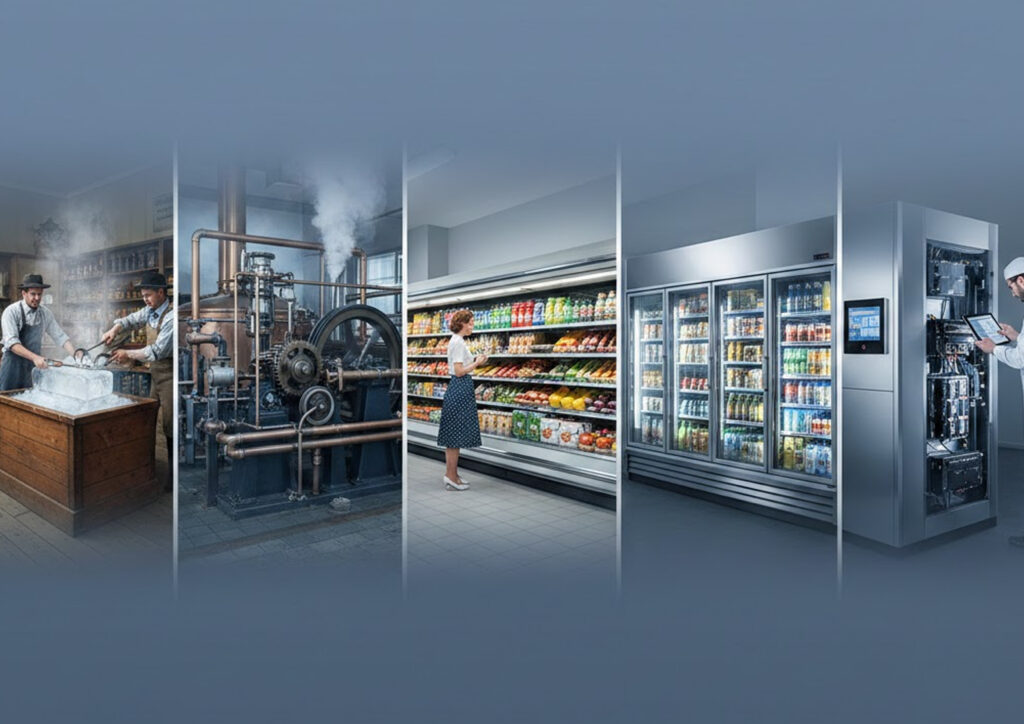
Commercial refrigeration has transformed the way restaurants, grocery stores, warehouses, and food distributors operate. What once required ice blocks and insulated cabinets has evolved into highly engineered systems that protect millions of dollars in inventory every day.
Understanding the history of commercial refrigeration highlights just how critical modern systems are — and why professional commercial refrigeration service and maintenance are essential to keeping them running efficiently.
The Ice Harvesting Era (1800s)
Before mechanical refrigeration, businesses relied on natural ice.
In the early 19th century:
- Ice was harvested from frozen lakes during winter
- Large icehouses stored blocks year-round
- Insulated cabinets called “iceboxes” kept food cool
- Delivery services supplied ice to restaurants and markets
While innovative for the time, ice storage was inconsistent, unsanitary by modern standards, and highly dependent on seasonal weather conditions.
The Birth of Mechanical Refrigeration
The late 1800s marked the beginning of mechanical refrigeration systems.
Early systems used:
- Ammonia-based cooling
- Compression technology
- Large industrial compressors
- Basic evaporator coils
These early machines were primarily used in breweries, meatpacking plants, and cold storage warehouses.
By the early 20th century, mechanical refrigeration began expanding into commercial kitchens and grocery operations, revolutionizing food safety and distribution.
Expansion Into Restaurants and Retail (1900–1950)
As technology improved, refrigeration systems became more compact and practical for everyday commercial use.
During this period:
- Refrigerated display cases were introduced
- Supermarkets adopted centralized refrigeration systems
- Walk-in coolers and freezers became standard
- Electric compressors replaced steam-powered units
This era laid the foundation for modern restaurant refrigeration repair and commercial refrigeration maintenance services.
The Rise of Walk-In Coolers and Freezers
Mid-20th century innovations made walk-in coolers and freezers more accessible and affordable.
These systems allowed businesses to:
- Store larger volumes of perishable goods
- Maintain consistent temperatures
- Improve inventory management
- Expand food distribution networks
As systems became more advanced, the need for professional walk-in cooler repair and walk-in freezer service also grew.
Refrigerant Evolution and Environmental Regulations
Throughout the 20th century, refrigerants evolved significantly.
Older refrigerants such as CFCs were widely used but later phased out due to environmental concerns. Modern systems use more environmentally responsible refrigerants with improved efficiency and lower environmental impact.
This shift increased the importance of:
- Proper refrigerant handling
- Certified technicians
- Compliance with regulations
- Professional commercial refrigeration service
Ongoing regulatory changes continue to shape the industry today.
Energy Efficiency and Smart Technology
Today’s commercial refrigeration systems are far more advanced than their early counterparts.
Modern systems feature:
- Digital temperature controls
- Smart monitoring systems
- Energy-efficient compressors
- Improved insulation materials
- Automated defrost cycles
These advancements help reduce energy costs, improve reliability, and extend equipment lifespan.
However, with greater technological complexity comes the need for experienced refrigeration repair company support to diagnose and maintain these systems properly.
Why Maintenance Matters More Than Ever
As refrigeration systems have evolved, so has their complexity.
Modern equipment requires:
- Regular commercial refrigeration maintenance
- Electrical diagnostics
- Refrigerant monitoring
- Coil cleaning
- Performance optimization
Without proper service, even the most advanced systems can fail — leading to emergency refrigeration repair, inventory loss, and business disruption.
The Future of Commercial Refrigeration
The industry continues to evolve with innovations such as:
- Low-GWP refrigerants
- IoT-based monitoring
- Predictive maintenance technology
- Advanced energy management systems
Businesses that invest in routine maintenance and system upgrades are better positioned to control operating costs and reduce downtime.
FAQ: Commercial Refrigeration History
When was commercial refrigeration first invented?
Mechanical refrigeration began developing in the late 1800s, primarily for industrial applications.
What did businesses use before refrigeration?
Ice harvesting and insulated iceboxes were the primary methods for preserving food.
Why were older refrigerants phased out?
Certain refrigerants were found to damage the ozone layer and contribute to environmental concerns.
How long have walk-in coolers been used?
Walk-in coolers became widely used in the mid-20th century as systems became more practical for commercial operations.
Supporting Modern Refrigeration Systems
From ice blocks to advanced digital systems, commercial refrigeration has come a long way. Today’s equipment is more efficient and reliable than ever — but it still requires expert care.
At Buffo’s Refrigeration, we specialize in commercial refrigeration maintenance, walk-in cooler repair, walk-in freezer service, restaurant refrigeration repair, and emergency refrigeration repair to keep modern systems operating at peak performance.
Schedule Professional Refrigeration Service Today
Protect your investment with experienced, dependable service.
📞Call Us For A Free Quote 775-782-8204 | Buffos-Refrigeration.com