Commercial cooling failures can bring a business to a halt in minutes. For restaurants, grocery stores, and hospitality businesses in Northern Nevada, a failed cooler means spoiled inventory, health code risks, and lost revenue. Therefore, understanding why these failures happen is the first step toward preventing them.
Businesses in Sparks, Carson City, Gardnerville, and Reno face unique challenges. Nevada’s dry heat pushes commercial cooling equipment hard during the summer months. Additionally, cold desert nights in the fall and winter can stress systems in ways that owners may not expect.
At Buffos Commercial Refrigeration & HVAC Services, our technicians see the same root causes repeat again and again. Because of this, we want to share what we know so you can protect your equipment and your bottom line.
Why Commercial Cooling Failures Happen More Often Than You Think
Most cooling failures do not happen without warning. In fact, equipment usually sends early signals days or weeks before a full breakdown. However, many business owners miss these signs because they are focused on daily operations.
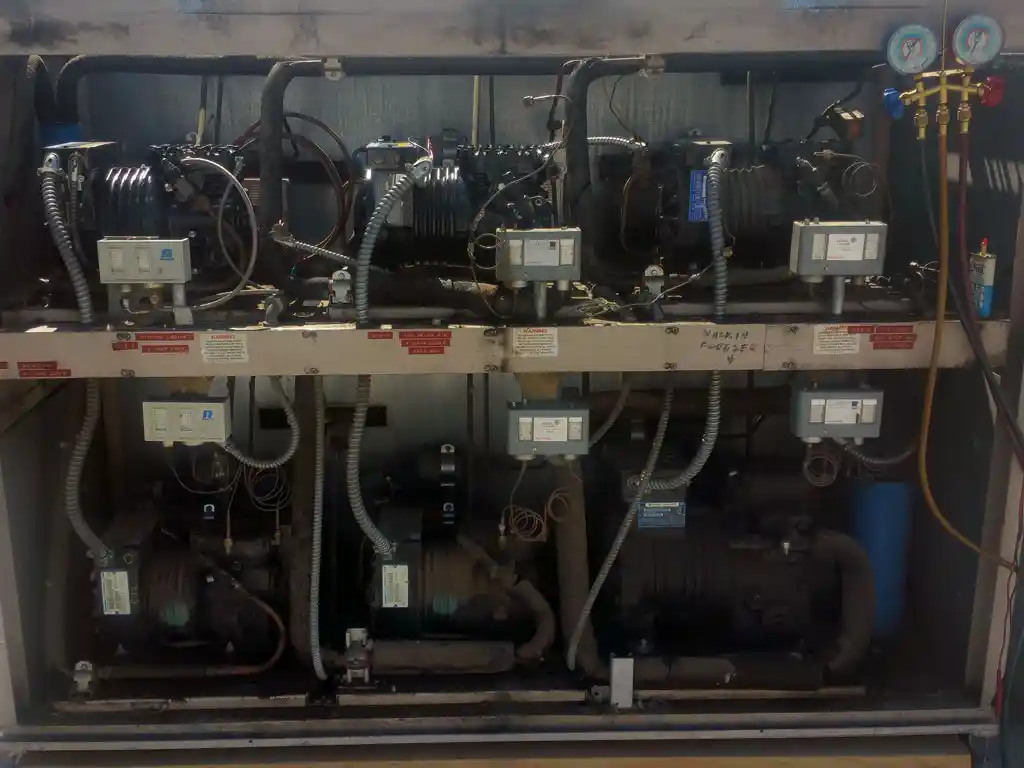
Commercial refrigeration and HVAC systems are complex. They involve compressors, condenser coils, evaporator coils, refrigerant lines, fans, and electronic controls. When any one of these components underperforms, the entire system can struggle.
Neglected Preventive Maintenance
Skipped maintenance is the most common cause of cooling failures we see across the region. Condenser coils collect dust, grease, and debris over time. As a result, they cannot release heat efficiently, and the compressor works harder than it should.
Moreover, dirty filters restrict airflow and reduce cooling capacity. Belts wear out, refrigerant levels drop slowly, and electrical connections corrode. These issues compound over time. Furthermore, a unit that has not been serviced in over a year is far more likely to fail during peak demand seasons.
Refrigerant Leaks
Refrigerant leaks are another leading cause of cooling failures in commercial settings. When refrigerant levels drop, the system loses its ability to transfer heat effectively. Therefore, temperatures inside a cooler or freezer begin to rise even when the unit appears to be running normally.
Leaks often develop at fittings, valves, and coil connections. Additionally, vibration from the compressor can loosen joints over time. A slow leak may go unnoticed for weeks, quietly damaging your compressor until it fails completely.
Equipment and Component Failures That Cause Shutdowns
Even well-maintained equipment can experience component failures. However, regular inspections catch most problems before they become emergencies. Below are the most common component-level failures we repair for businesses in Sparks, Carson City, and the surrounding areas.
Compressor Failure
The compressor is the heart of any commercial refrigeration or cooling system. When it fails, the entire system stops cooling. Compressors fail for many reasons. For example, overheating from dirty coils, liquid refrigerant slugging, and low lubrication are all common culprits.
Compressor replacement is one of the most expensive repairs in commercial refrigeration. Because of this, protecting the compressor through regular maintenance is always the smarter financial choice. Moreover, catching early warning signs like unusual noise or cycling issues can extend compressor life significantly.
Condenser and Evaporator Coil Problems
Condenser coils release heat from the refrigerant to the outside air. Evaporator coils absorb heat from inside the cooled space. Both sets of coils must remain clean and undamaged to work correctly.
In Sparks and the broader Washoe County area, condenser coils collect dust and debris quickly due to the arid climate. Additionally, grease buildup from restaurant kitchens accelerates fouling. On the other hand, evaporator coils can ice over when airflow is restricted or defrost cycles fail. Iced coils block airflow entirely, causing temperatures to rise rapidly.
Fan Motor and Blower Failures
Fans move air across condenser and evaporator coils. When a fan motor fails, heat cannot escape and cold air cannot circulate. Therefore, even a functioning compressor will not keep temperatures stable.
Fan motor failures are often gradual. First, you may notice unusual sounds or reduced airflow. Next, temperatures begin to fluctuate. Then, the system may shut down on a high-temperature safety switch. Catching fan issues early prevents compressor damage and full system failure.
Environmental and Operational Factors Unique to Northern Nevada
Northern Nevada’s climate adds specific stresses to commercial cooling equipment. Sparks, Carson City, Gardnerville, and Minden all share a high-desert environment with wide temperature swings and low humidity. These conditions affect equipment in ways that many manufacturers’ standard guidelines do not fully anticipate.
Extreme Summer Heat
Summer temperatures in the Sparks and Reno metro area frequently climb into the triple digits. During heat waves, condensing units struggle to reject heat into the already-hot outdoor air. As a result, head pressure rises and compressors work at or beyond their rated limits.
Additionally, rooftop units in commercial buildings absorb radiant heat from roofing materials. This pushes operating temperatures even higher. Therefore, businesses without seasonal maintenance checks going into summer are at significant risk of mid-season failures.
Dust, Wind, and Desert Debris
Nevada’s dry climate generates significant airborne dust. Condenser coils on rooftop units and outdoor condensers can become clogged in a matter of weeks during windy conditions. Furthermore, cottonwood season in the spring sends fibrous debris into coil fins, restricting airflow almost immediately.
For businesses in South Carson City, the Douglas County corridor, and the greater Sparks industrial and commercial districts, scheduling coil cleanings at least twice per year is a practical minimum. In heavy-use or high-debris environments, quarterly cleanings may be more appropriate.
Electrical Issues and Power Quality
Power fluctuations, voltage spikes, and poor wiring connections are underappreciated causes of cooling failures. Commercial refrigeration equipment is sensitive to voltage variations. Moreover, older electrical panels in legacy commercial buildings throughout Northern Nevada may not provide stable power to modern equipment.
Additionally, loose wire connections at contactor terminals and control boards cause intermittent failures that are difficult to diagnose. Because of this, a professional electrical inspection of your refrigeration and HVAC equipment should be part of every annual maintenance visit.
Walk-In Cooler and Freezer Specific Failure Points
Walk-in coolers and freezers have additional failure points beyond standard refrigeration systems. Therefore, they deserve special attention in any preventive maintenance plan.
- Door gaskets and hinges: Worn or damaged door seals allow warm, moist air to enter. As a result, the unit works harder and frost buildup increases on evaporator coils.
- Defrost system failures: When defrost heaters or timers fail, ice accumulates on evaporator coils and blocks airflow completely.
- Damaged panels and insulation: Compromised wall panels reduce the unit’s ability to hold temperature and increase energy consumption significantly.
- Drain line clogs: Blocked drains cause water to back up and freeze, damaging floors and coil assemblies over time.
- Temperature controller failures: Faulty thermostats cause erratic temperature swings that can spoil inventory without triggering an obvious alarm.
Our technicians regularly inspect all of these components for restaurants and grocers in Carson City, Gardnerville, and the surrounding communities. Contact our team to schedule a walk-in inspection before a small issue becomes a costly emergency.
Warning Signs Your Commercial Cooling System Is About to Fail
Business owners and kitchen managers should watch for these early warning signs. Catching them early can prevent a full system failure.
- Temperatures running warmer than set points by more than a few degrees
- Unusual sounds such as grinding, rattling, or clicking during startup or operation
- Ice or frost buildup on coils, fans, or interior walls of coolers and freezers
- Higher-than-normal energy bills without a clear operational explanation
- Frequent short cycling where the compressor starts and stops rapidly
- Condensation or moisture on the outside of display cases or walk-in doors
- Burning smells or tripped breakers associated with refrigeration or HVAC equipment
If you notice any of these signs, do not wait. Call a qualified commercial refrigeration technician immediately. Additionally, document the symptoms so your technician can diagnose the problem more quickly.
Frequently Asked Questions About Commercial Cooling Failures
How often should commercial refrigeration equipment be serviced?
Most commercial refrigeration systems benefit from at least two professional service visits per year. However, heavy-use environments like restaurant kitchens or grocery produce sections may require quarterly visits. Therefore, the right frequency depends on your specific equipment and operating conditions.
Can I prevent cooling failures entirely with good maintenance?
Preventive maintenance significantly reduces the risk of unexpected failures. However, no maintenance program can eliminate all failures entirely. What it does do is catch problems early, extend equipment life, and reduce the severity and cost of repairs when issues do occur.
What should I do immediately when my commercial cooler fails?
First, check the thermostat, circuit breakers, and disconnect switches. Next, look for obvious signs like ice buildup or tripped safeties. Then, call a qualified technician right away. Additionally, begin moving temperature-sensitive inventory to backup storage to minimize losses.
Why do cooling systems fail more often in summer in Sparks and Carson City?
High ambient temperatures force condensing units to work much harder. As a result, components that are already worn reach their limits faster during heat waves. Furthermore, systems that have not been serviced going into summer are especially vulnerable to failure during peak heat periods.
Is it better to repair or replace aging commercial refrigeration equipment?
The answer depends on the age, condition, and repair history of the equipment. Moreover, energy efficiency improvements in newer equipment can offset replacement costs over time. We recommend scheduling a professional evaluation to help you make an informed decision based on your specific situation.
Protect Your Business With Reliable Commercial Cooling Service
Commercial cooling failures are disruptive and costly. However, most of them are preventable with the right maintenance strategy and a trusted service partner. Businesses throughout Sparks, Reno, Carson City, Gardnerville, and Minden depend on reliable refrigeration and cooling to operate safely and profitably every day.
At Buffos Commercial Refrigeration & HVAC Services, we bring fast diagnostics, honest recommendations, and lasting repairs to businesses across Northern Nevada. Whether you need emergency service, a seasonal maintenance plan, or guidance on aging equipment, our team is ready to help.
Do not wait for a full failure to take action. Talk with an HVAC and refrigeration expert at Buffos today and keep your operation running at its best all year long.