For restaurants, grocery stores, convenience stores, healthcare facilities, and warehouses in Gardnerville, NV, cold storage compliance is critical to protecting inventory and maintaining food safety. In Nevada’s high-desert climate—where summer temperatures often exceed 100°F and dust is a constant factor—commercial refrigeration systems operate under significant stress.
Without proper compliance procedures and routine commercial refrigeration maintenance, businesses risk temperature fluctuations, food spoilage, failed inspections, and expensive emergency refrigeration repair.
Understanding and applying cold storage compliance best practices helps prevent food loss and ensures your refrigeration systems perform reliably year-round.
Why Cold Storage Compliance Matters
Cold storage compliance means meeting FDA food safety guidelines and local health department regulations for storing perishable goods. Because food products must remain within strict temperature ranges, even minor fluctuations can lead to bacterial growth and product spoilage.
Compliance helps businesses:
- Maintain safe and consistent temperatures
- Prevent contamination and foodborne illness
- Reduce product waste
- Avoid health code violations
- Protect brand reputation
- Limit liability risks
For businesses serving Nevada and surrounding areas, compliance must also address environmental challenges unique to the region.
The Impact of Gardnerville’s Climate on Refrigeration
Extreme Summer Heat
Triple-digit temperatures force compressors to run longer cycles, increasing wear and the risk of failure. Without proper maintenance, walk-in cooler repair or walk-in freezer service may become necessary during peak demand.
Dust and Debris
High-desert dust clogs condenser coils and reduces airflow, causing refrigeration systems to overwork. Dirty coils are one of the most common causes of inefficient cooling and unexpected breakdowns.
Hard Water and Mineral Buildup
Mineral-rich water can contribute to scale buildup in ice machines and certain refrigeration components, impacting both efficiency and sanitation.
These conditions make preventative maintenance and compliance-focused inspections essential.
Key Cold Storage Compliance Tips to Prevent Food Loss
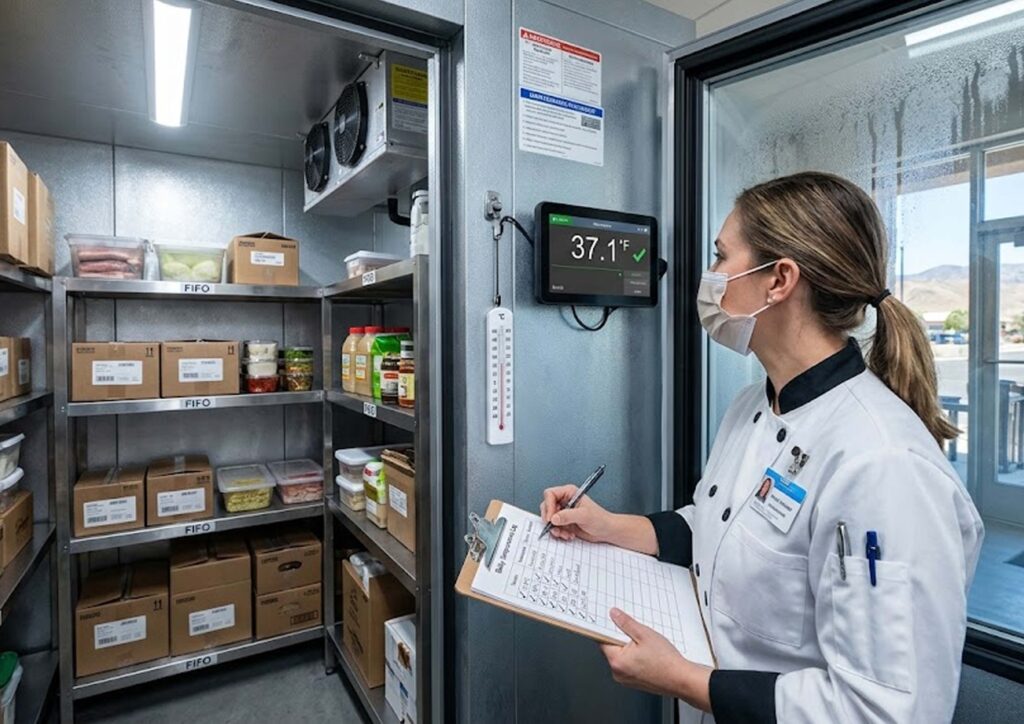
1. Monitor and Log Temperatures Daily
Temperature monitoring is one of the most important compliance practices.
Recommended storage temperatures:
- Refrigerators: 35°F to 38°F
- Walk-in coolers: 35°F to 40°F
- Freezers: 0°F or below
- Walk-in freezers: -10°F to 0°F
Use calibrated thermometers or digital monitoring systems. Daily logs provide documentation for inspections and early detection of system issues.
If your walk-in cooler is not holding temperature, contact a professional refrigeration repair company immediately.
2. Schedule Routine Commercial Refrigeration Maintenance
Regular commercial refrigeration service reduces the risk of unexpected equipment failure.
A preventative maintenance program typically includes:
- Condenser coil cleaning
- Refrigerant level checks
- Electrical component inspection
- Thermostat calibration
- Drain line clearing
- Door gasket inspection
- Airflow verification
Routine maintenance helps prevent costly emergency refrigeration repair and extends system lifespan.
3. Inspect Door Seals and Insulation
Damaged door gaskets allow warm air infiltration, forcing compressors to work harder—especially during Nevada’s hot summers.
Replacing worn gaskets improves:
- Temperature consistency
- Energy efficiency
- Equipment longevity
4. Maintain Proper Airflow
Improper airflow can create uneven cooling and hot spots inside storage units.
Best practices include:
- Avoid overloading shelves
- Keep vents and evaporator fans unobstructed
- Maintain space between stored items
- Schedule regular coil cleaning
Proper airflow reduces strain and supports compliance.
5. Keep Equipment Clean and Sanitized
Cold storage units must remain sanitary to meet health department standards.
Regular cleaning:
- Prevents mold and bacteria growth
- Protects stored food
- Improves system efficiency
- Supports successful inspections
Professional cleaning through a trusted commercial refrigeration service provider ensures thorough, compliant sanitation.
6. Prepare for Peak Summer Demand
Scheduling maintenance in early spring helps prepare systems for extreme summer temperatures.
Pre-summer service can:
- Identify worn components
- Improve efficiency
- Reduce compressor strain
- Prevent mid-season breakdowns
Proactive servicing is one of the most effective ways to avoid food loss during high-demand periods.
7. Train Staff on Compliance Procedures
Employees play a vital role in cold storage compliance.
Staff should be trained to:
- Check and log temperatures
- Keep doors closed when not in use
- Follow FIFO (First In, First Out) inventory rotation
- Report unusual noises or temperature changes
- Clean spills promptly
Early reporting allows for timely restaurant refrigeration repair or walk-in freezer service before inventory is compromised.
Warning Signs of Potential Refrigeration Failure
Contact a commercial refrigeration repair company immediately if you notice:
- Temperature fluctuations
- Excessive frost buildup
- Water pooling near units
- Unusual noises
- Rising energy bills
- Frequent compressor cycling
- Foul odors inside storage units
Prompt service can prevent thousands of dollars in product loss.
Frequently Asked Questions
How often should commercial refrigeration systems be serviced?
Most systems should receive professional commercial refrigeration maintenance at least twice per year. High-volume businesses or facilities exposed to extreme heat may require quarterly service.
Why is my walk-in cooler not holding temperature?
Common causes include dirty condenser coils, refrigerant leaks, faulty thermostats, damaged door seals, or restricted airflow. Immediate walk-in cooler repair is recommended.
Can preventative maintenance reduce food loss?
Yes. Routine inspections identify small problems before they escalate into system failures that cause spoilage and downtime.
Is temperature logging required for compliance?
Yes. Many health departments require documented temperature logs to verify safe food storage practices.
Protect Your Inventory With Reliable Commercial Refrigeration Service
Cold storage compliance is one of the most effective ways to prevent food loss and protect your business in Gardnerville, NV. Proactive maintenance, consistent monitoring, and professional service ensure your refrigeration systems operate efficiently—even in Nevada’s extreme heat.
Buffo’s Refrigeration is a trusted commercial refrigeration repair company serving Nevada and surrounding areas. We specialize in:
- Commercial refrigeration maintenance
- Commercial refrigeration service
- Walk-in cooler repair
- Walk-in freezer service
- Restaurant refrigeration repair
- Emergency refrigeration repair
- Commercial refrigeration installation
- Commercial HVAC services
Our experienced technicians understand the challenges of Gardnerville’s climate and deliver fast, reliable solutions that minimize downtime and protect your inventory.
Schedule Service Today
Don’t let refrigeration issues lead to costly food loss.
📞Call Us For A Free Quote 775-782-8204 | Buffos-Refrigeration.com