Reducing food waste with better cooler settings is one of the simplest ways restaurants, grocery stores, and food service businesses can protect profits. Even small temperature inconsistencies inside a walk-in cooler can shorten shelf life, increase spoilage, and lead to unnecessary inventory loss.
In Nevada’s extreme heat, refrigeration systems work harder to maintain safe storage conditions. Therefore, properly calibrated cooler settings play a major role in food quality, compliance, and long-term cost control. Buffo’s Refrigeration provides professional commercial refrigeration service throughout Nevada to help businesses optimize cooler performance.
Why Cooler Settings Matter
First, refrigeration settings directly affect how long food remains fresh. If a cooler runs too warm, bacteria multiply more quickly. However, if it runs too cold, certain products—especially produce—can freeze or lose quality.
Maintaining the correct temperature ensures:
- Longer shelf life
- Reduced spoilage
- Stable product quality
- Compliance with FDA guidelines
When businesses fine-tune cooler settings, they reduce waste and improve overall profitability.
Ideal Walk-In Cooler Temperature
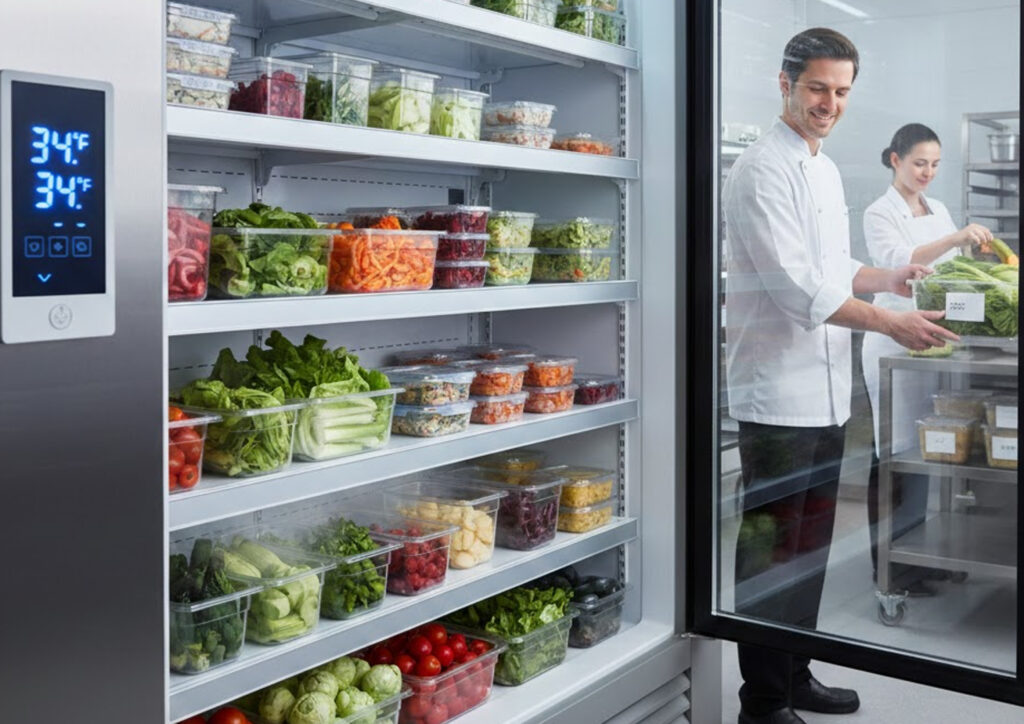
Most refrigerated foods must remain at 41°F or below. However, many operators set their coolers slightly lower—typically between 36°F and 38°F—to allow for temperature fluctuations during door openings.
This buffer helps prevent food from entering the temperature danger zone while maintaining optimal freshness.
Optimize Airflow for Even Cooling
Temperature settings alone are not enough. Airflow plays a critical role in reducing waste.
To improve airflow:
- Avoid overcrowding shelves
- Keep products away from evaporator fans
- Leave space between containers
- Avoid blocking air vents
When air circulates evenly, products cool consistently. As a result, businesses prevent hot spots that lead to spoilage.
Monitor Humidity Levels
Humidity also affects food quality. For example:
- High humidity may cause condensation and packaging damage
- Low humidity can dry out produce
- Fluctuating humidity shortens shelf life
Balanced humidity supports product integrity and reduces shrinkage. Therefore, routine commercial refrigeration maintenance should include humidity checks when possible.
Calibrate Thermostats Regularly
Over time, thermostats can drift out of calibration. Even a small inaccuracy can create temperature discrepancies inside the cooler.
Regular inspections and professional calibration ensure:
- Accurate temperature readings
- Reliable compressor cycling
- Reduced strain on system components
- Consistent cooling performance
This proactive approach minimizes the need for emergency refrigeration repair.
Minimize Door Openings
Every time a cooler door opens, warm air enters and forces the system to recover. Frequent openings cause temperature spikes that can shorten food shelf life.
To reduce waste:
- Train staff to retrieve items quickly
- Avoid propping doors open
- Install strip curtains if needed
- Inspect door gaskets regularly
These simple operational adjustments protect both equipment and inventory.
Use Temperature Logs and Monitoring Systems
Consistent temperature logging helps identify small issues before they become major problems. Digital monitoring systems provide alerts when temperatures exceed safe limits.
By reviewing logs regularly, businesses can detect:
- Gradual temperature increases
- Recovery delays
- Frequent compressor cycling
Early detection prevents spoilage and reduces waste.
Nevada Climate Considerations
Nevada’s hot summers increase compressor workload. Consequently, systems may struggle if settings are not optimized or if equipment lacks proper maintenance.
Pre-season inspections ensure that coolers maintain safe temperatures even during peak heat. As a result, businesses avoid mid-summer breakdowns that can cause large-scale inventory loss.
Financial Benefits of Proper Settings
Better cooler settings deliver measurable financial advantages:
- Lower inventory shrinkage
- Improved product consistency
- Reduced energy costs
- Fewer emergency repairs
- Extended equipment lifespan
When businesses reduce waste, they improve profit margins without increasing sales volume.
Frequently Asked Questions
What is the best temperature for a walk-in cooler?
Typically between 36°F and 38°F, ensuring food remains at or below 41°F at all times.
Can improper settings cause food spoilage?
Yes. Even small temperature fluctuations can shorten shelf life and increase bacterial growth.
Does better calibration improve energy efficiency?
Yes. Properly calibrated systems cycle efficiently and reduce compressor strain.
How often should cooler settings be checked?
Daily monitoring is recommended, with professional inspections at least twice per year.
Schedule Professional Refrigeration Service Today
Reducing food waste with better cooler settings protects your inventory, improves food quality, and increases profitability. By combining proper calibration, airflow management, and routine maintenance, businesses can significantly reduce preventable losses.
Buffo’s Refrigeration provides expert commercial refrigeration service, walk-in cooler repair, walk-in freezer service, preventative maintenance programs, HVAC service, and 24/7 emergency refrigeration repair throughout Nevada and surrounding areas. Our experienced technicians help businesses optimize cooler performance in Nevada’s demanding climate.
📞Call Us For A Free Quote 775-782-8204 | Buffos-Refrigeration.com