In a busy restaurant, your refrigeration systems are among the most critical pieces of equipment. They keep ingredients fresh, maintain food safety, and protect your bottom line. But when a cooler or freezer isn’t operating safely, it can lead to food spoilage, costly repairs, and even health code violations.
At Buffo’s Refrigeration, we help restaurants throughout Nevada maintain reliable, compliant, and safe refrigeration systems. Use this safety checklist to keep your equipment operating properly and your kitchen running smoothly.
Check Temperature Consistency
Your walk-in coolers, freezers, and prep stations should maintain consistent temperatures at all times.
- Coolers should stay between 35°F and 38°F
- Freezers should stay at or below 0°F
Fluctuating temperatures can lead to food spoilage or unsafe storage conditions. Use accurate thermometers and regularly verify readings to ensure your units meet food safety standards.
Inspect Door Gaskets and Seals
Door gaskets are essential for maintaining airtight seals. If they’re cracked, torn, or dirty, cold air escapes and warm air enters—causing your system to work harder and risk temperature instability.
Inspect gaskets weekly for wear, and clean them with mild soap and warm water to prevent debris buildup. Replace damaged seals promptly to maintain efficiency and safety.
Monitor and Clean Condenser and Evaporator Coils
Dust and grease buildup on coils reduce heat transfer, making your system run longer and increasing the chance of overheating. Dirty coils can also lead to inefficient cooling and system stress.
Clean condenser and evaporator coils every few months, or more frequently if your kitchen generates heavy grease or debris. This not only keeps your system efficient but also reduces fire risk from overheating components.
Check for Ice or Frost Buildup
Frost buildup around doors, evaporator coils, or fans can indicate a sealing issue, humidity imbalance, or defrost system failure. Ice not only reduces cooling efficiency but can create slipping hazards on floors near cooler entrances.
Regularly inspect for frost and address the root cause quickly—whether it’s a door left open too long, poor insulation, or mechanical malfunction.
Inspect Electrical Components
Loose wiring, damaged cords, or corroded terminals are serious safety risks. Electrical issues can cause equipment failure, temperature loss, or even fire hazards.
During inspections, check for frayed wires, burnt smells, or flickering lights in your control panels. Have any electrical concerns handled immediately by a licensed refrigeration technician.
Test Defrost and Drain Systems
Blocked or malfunctioning defrost drains can lead to water buildup, which may freeze or leak onto floors—creating dangerous slip hazards.
Check that your defrost cycles run properly and that drains are clear. If you notice water pooling inside your cooler or freezer, schedule service right away to prevent damage or bacterial growth.
Inspect Fans and Airflow
Proper airflow ensures even cooling throughout your units. If evaporator fans are dirty, obstructed, or not running, certain areas of your cooler may become warmer than others.
Check that fans are running smoothly, listen for unusual noises, and make sure air vents aren’t blocked by stored items. This helps maintain consistent temperatures and prevents overworked compressors.
Keep Units Clean and Organized
Good sanitation is essential for food safety and refrigeration performance. Keep your coolers clean, dry, and organized to allow proper air circulation.
Avoid overloading shelves or blocking vents, and clean spills promptly to prevent bacteria or mold growth. Regular cleaning also helps staff spot problems like leaks or unusual frost early.
Verify Alarm and Monitoring Systems
Many modern refrigeration units come with built-in alarms or monitoring systems that alert staff when temperatures rise unexpectedly. Ensure these alarms are active, calibrated, and tested regularly.
For added safety, consider installing remote monitoring systems that send alerts directly to your phone or email—so you can act before a small issue becomes a costly emergency.
Schedule Professional Maintenance
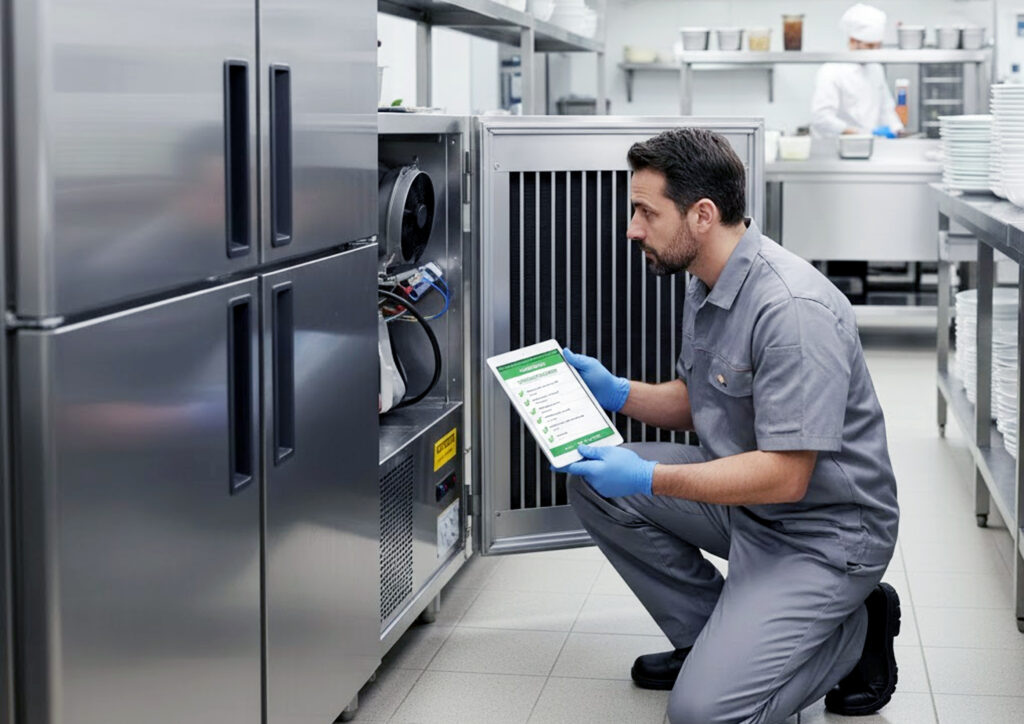
Even with regular in-house checks, professional service is essential. Routine commercial refrigeration maintenance helps identify hidden problems like refrigerant leaks, failing compressors, or control issues before they cause breakdowns.
At Buffo’s Refrigeration, our maintenance programs include:
- Temperature and performance testing
- Electrical and refrigerant checks
- Coil and fan cleaning
- Gasket and door inspections
- System calibration and safety testing
Consistent maintenance keeps your system safe, compliant, and efficient all year long.
FAQs About Restaurant Refrigeration Safety
How often should restaurant refrigeration systems be serviced?
Most systems should be professionally serviced every 3 to 6 months, depending on usage and environment.
What’s the best way to monitor cooler temperatures?
Use a digital thermometer or smart temperature monitoring system that provides continuous tracking and alerts for unsafe conditions.
Can dirty coils or filters cause safety issues?
Yes. Dirty components reduce efficiency, increase fire risk, and can cause temperature fluctuations that compromise food safety.
Schedule Service Today
Don’t wait until a refrigeration problem puts your business at risk. Contact Buffo’s Refrigeration today to schedule a safety inspection or preventative maintenance service. We proudly serve Nevada and surrounding areas with professional, reliable commercial refrigeration repair, maintenance, and installation services.
📞Call Us For A Free Quote 775-782-8204 | Buffos-Refrigeration.com