For restaurants, grocery stores, convenience stores, and commercial kitchens across Minnesota and the Midwest, refrigeration setup directly impacts productivity, food safety, and operating costs.
A poorly organized or improperly configured refrigerator system can slow down staff, increase energy consumption, and shorten equipment lifespan. On the other hand, a properly set up commercial refrigeration system improves workflow, protects inventory, and reduces the need for emergency refrigeration repair.
Here’s how to set up your refrigerators for maximum productivity.
Start With Proper Placement and Installation
Productivity begins with correct installation.
Commercial refrigerators and walk-in coolers should be:
- Installed away from ovens, fryers, and heat-producing equipment
- Positioned with proper ventilation clearance
- Placed on level flooring
- Connected to dedicated electrical circuits
- Calibrated to manufacturer specifications
Minnesota’s seasonal temperature swings make proper airflow and ventilation especially important. Overheating during summer months can strain compressors and increase the need for commercial refrigeration maintenance.
Professional installation ensures your system performs efficiently from day one.
Organize for Workflow Efficiency
Refrigerator organization directly affects kitchen speed and staff productivity.
For maximum efficiency:
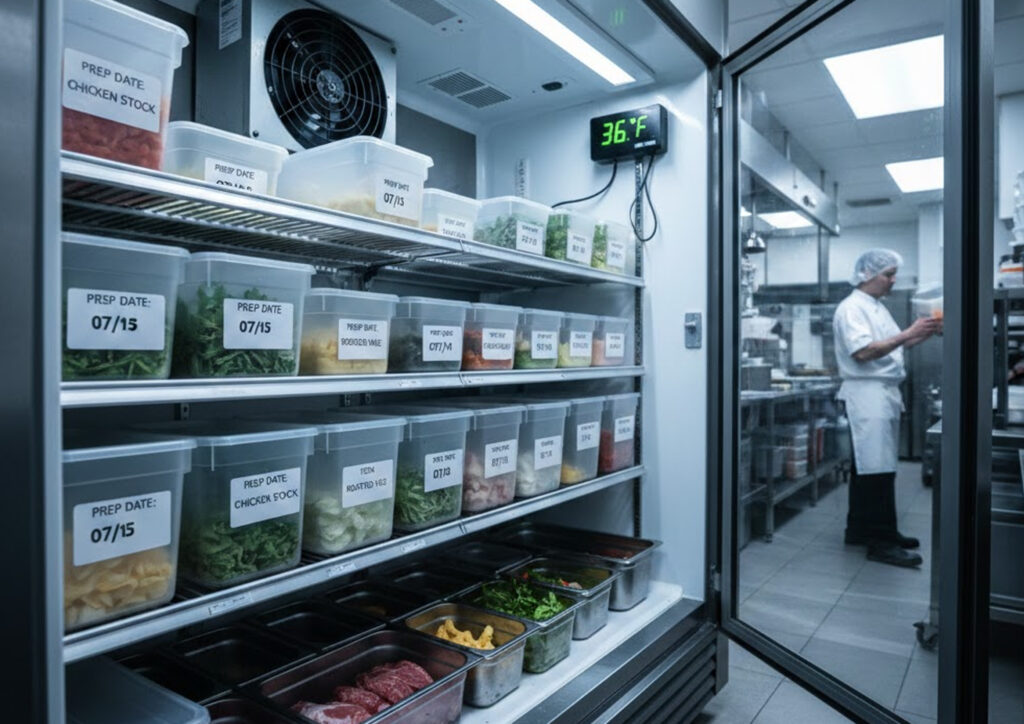
- Store high-use items at eye level
- Keep raw products separated from ready-to-eat items
- Label and date all stored inventory
- Use clear storage containers
- Avoid overcrowding shelves
In walk-in coolers and walk-in freezers, organize products based on usage frequency and station proximity. This reduces door-open time, helping maintain stable temperatures and lowering energy use.
Efficient organization also reduces strain on the system by improving airflow circulation.
Maintain Proper Temperature Settings
Correct temperature settings protect food safety and equipment performance.
Recommended temperature ranges:
- Walk-in coolers: 35°F to 38°F
- Walk-in freezers: -10°F to 0°F
- Reach-in refrigerators: 35°F to 40°F
Temperatures that are too low increase energy costs. Temperatures that are too high increase spoilage risk and may require urgent walk-in cooler repair or walk-in freezer service.
Install reliable thermometers and monitor readings daily.
Ensure Proper Airflow
Airflow is critical to productivity and equipment longevity.
Avoid:
- Blocking evaporator fans
- Stacking products directly against walls
- Overfilling shelves
- Blocking air vents
Restricted airflow forces compressors to work harder, increasing energy consumption and wear. Proper airflow reduces the likelihood of emergency refrigeration repair.
Regular commercial refrigeration service inspections ensure fans, coils, and airflow components are functioning correctly.
Implement a Cleaning Routine
Clean equipment runs more efficiently.
Establish a routine to:
- Clean condenser coils
- Sanitize interior surfaces
- Clear drain lines
- Inspect door gaskets
- Remove debris around the unit
Dirty coils can increase energy consumption by 10–30% and lead to overheating. In restaurant environments, grease buildup accelerates system strain.
Routine cleaning reduces long-term maintenance costs and supports commercial refrigeration maintenance efforts.
Train Staff on Best Practices
Staff training is essential for maximizing productivity.
Employees should:
- Minimize door-open time
- Close doors securely
- Report unusual noises immediately
- Avoid overloading shelves
- Follow FIFO (First In, First Out) inventory rotation
Small daily habits significantly reduce the risk of restaurant refrigeration repair needs.
Use Preventative Maintenance to Support Performance
Even perfectly organized refrigerators require professional oversight.
A preventative commercial refrigeration maintenance program helps:
- Identify refrigerant issues early
- Inspect electrical components
- Monitor compressor performance
- Test defrost cycles
- Prevent sudden failures
Businesses serving Minnesota and surrounding areas benefit from quarterly service to keep systems running reliably through seasonal changes.
Monitor Energy Efficiency
Energy-efficient systems lower operating costs and improve overall productivity.
Watch for signs of inefficiency:
- Constant cycling
- Rising utility bills
- Uneven temperature zones
- Excessive frost buildup
An experienced refrigeration repair company can evaluate system performance and recommend adjustments or upgrades.
FAQ: Commercial Refrigerator Setup
What is the ideal temperature for a commercial refrigerator?
Most commercial refrigerators should be maintained between 35°F and 40°F for optimal food safety.
Why is airflow important in a walk-in cooler?
Proper airflow ensures even cooling, reduces compressor strain, and prevents temperature fluctuations.
How often should commercial refrigerators be serviced?
Most businesses should schedule professional service at least quarterly.
Can poor organization damage refrigeration equipment?
Yes. Overcrowding and blocked vents reduce airflow, forcing the system to work harder and increasing wear.
Maximize Productivity With Professional Support
Proper setup, organization, and maintenance are essential to getting the most out of your refrigeration equipment.
At Buffo’s Refrigeration, we provide expert commercial refrigeration service for restaurants, grocery stores, and commercial facilities serving Minnesota and surrounding areas. Our services include:
- Commercial refrigeration maintenance
- Walk-in cooler repair
- Walk-in freezer service
- Restaurant refrigeration repair
- Emergency refrigeration repair
- Professional system evaluations
We help businesses protect inventory, improve efficiency, and reduce costly downtime.
Schedule Service to Optimize Your Refrigeration System
Set your refrigeration systems up for success — and keep them performing at their best.
📞Call Us For A Free Quote 775-782-8204 | Buffos-Refrigeration.com