
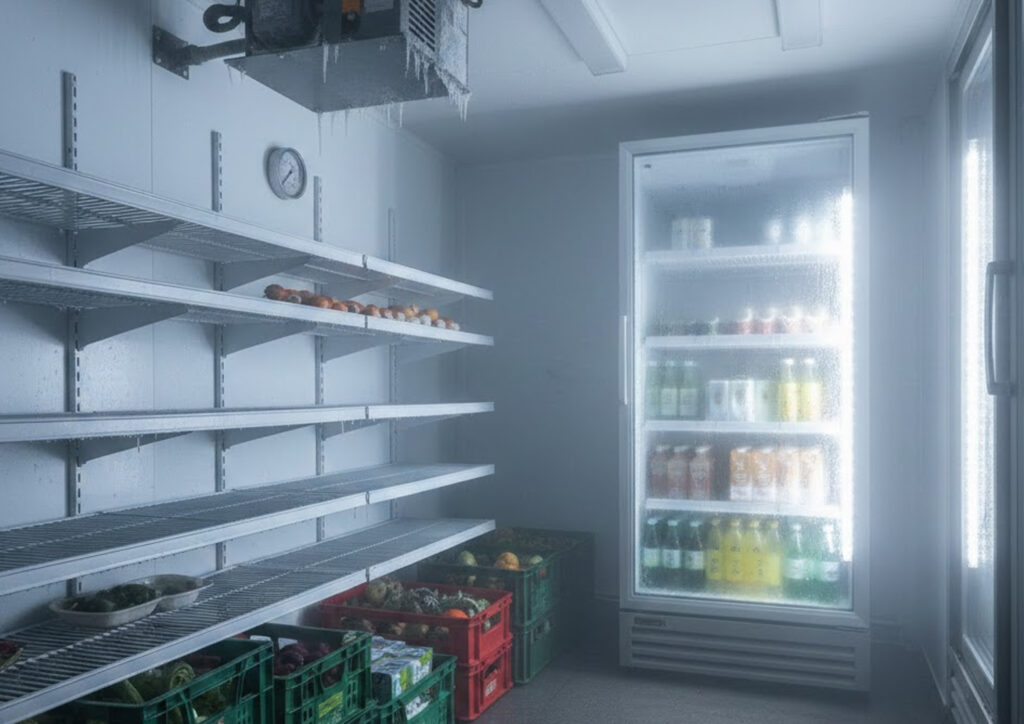
Understanding the impact of humidity on refrigeration is critical for restaurants, grocery stores, warehouses, and commercial facilities that rely on consistent cooling. While most businesses focus on temperature, humidity also plays a major role in equipment performance, food safety, and energy efficiency.
In Nevada, although the climate is generally dry, indoor humidity can fluctuate due to cooking operations, frequent door openings, and seasonal weather patterns. As a result, unmanaged humidity can strain commercial refrigeration systems and increase the risk of spoilage or breakdowns.
Buffo’s Refrigeration provides expert commercial refrigeration service throughout Nevada, helping businesses manage both temperature and humidity effectively.
How Humidity Affects Refrigeration Systems
Humidity directly influences how hard your refrigeration system must work. When warm, moist air enters a walk-in cooler or freezer, the system must remove both heat and moisture. Consequently, compressors and evaporator coils operate under increased strain.
High humidity can lead to:
- Excess frost buildup on evaporator coils
- Ice accumulation inside walk-in freezers
- Water condensation on walls and ceilings
- Reduced airflow efficiency
- Increased energy consumption
Over time, these conditions may result in walk-in cooler repair or emergency refrigeration repair if left unaddressed.
The Relationship Between Humidity and Frost Buildup
When moist air enters a cooler, condensation forms. Then, in freezing environments, that condensation turns into ice. Therefore, high humidity accelerates frost buildup on coils and interior surfaces.
Excess frost can:
- Restrict airflow
- Reduce cooling efficiency
- Force the compressor to run longer
- Increase wear and tear on system components
Routine commercial refrigeration maintenance helps prevent these issues by keeping coils clean and defrost systems functioning properly.
Food Quality and Humidity Control
Humidity levels also affect stored food. For example:
- High humidity may cause packaging damage or label deterioration.
- Low humidity can dry out produce and certain food items.
- Fluctuating humidity increases the risk of spoilage.
Maintaining balanced humidity levels supports product quality and compliance with food safety standards.
Energy Efficiency and Humidity
Humidity directly impacts energy use. When moisture levels rise, refrigeration systems must work harder to remove both heat and water vapor. As a result, energy bills increase and equipment lifespan may shorten.
To improve efficiency:
- Minimize door openings
- Install strip curtains or air curtains
- Ensure door gaskets seal properly
- Keep condenser and evaporator coils clean
- Schedule regular preventative maintenance
These proactive steps reduce moisture infiltration and improve overall performance.
The Role of HVAC in Humidity Control
HVAC systems play a significant role in controlling indoor humidity. Proper ventilation and airflow help stabilize ambient conditions around refrigeration units. In Nevada’s hot summers, balanced HVAC operation reduces stress on compressors and supports consistent cooling.
When HVAC systems fail to regulate indoor air, refrigeration equipment may struggle to maintain temperature and humidity balance.
Common Signs of Humidity-Related Problems
Watch for these warning signs:
- Frequent ice buildup in freezers
- Water pooling on cooler floors
- Condensation on walls or ceilings
- Increased compressor run time
- Rising energy costs
If you notice these symptoms, schedule professional commercial refrigeration service to prevent larger system failures.
Preventative Maintenance Is Key
Managing humidity requires proactive maintenance. Technicians should:
- Inspect and clean evaporator coils
- Verify defrost system operation
- Check refrigerant levels
- Inspect door seals and insulation
- Evaluate airflow and ventilation
Regular inspections reduce the likelihood of emergency refrigeration repair and extend equipment lifespan.
Frequently Asked Questions
Does humidity affect walk-in coolers?
Yes. High humidity increases moisture inside the unit, which can lead to condensation, frost buildup, and reduced efficiency.
Can humidity cause freezer ice buildup?
Absolutely. Moist air entering the freezer freezes quickly, causing excessive ice accumulation.
How can businesses control humidity?
Proper HVAC operation, minimizing door openings, and routine commercial refrigeration maintenance help regulate humidity levels.
Is humidity a concern in Nevada’s dry climate?
Yes. Even in dry climates, indoor environments—especially kitchens—can produce significant moisture that affects refrigeration performance.
Schedule Professional Refrigeration Service Today
Understanding the impact of humidity on refrigeration helps protect your inventory, reduce energy costs, and prevent equipment breakdowns. Proper maintenance and environmental control ensure reliable cooling performance year-round.
Buffo’s Refrigeration provides expert commercial refrigeration service, walk-in cooler repair, walk-in freezer service, preventative maintenance programs, HVAC service, and 24/7 emergency refrigeration repair throughout Nevada and surrounding areas. Our experienced technicians help businesses manage temperature and humidity effectively in Nevada’s demanding climate.
📞Call Us For A Free Quote 775-782-8204 | Buffos-Refrigeration.com