Planning a commercial refrigeration project for your business? Understanding what to expect during a refrigerator installation can save you time, money, and frustration. Whether you run a restaurant, grocery store, or food service operation, a smooth installation starts with knowing the process.
At Buffos Commercial Refrigeration & HVAC Services, we work with businesses across Carson City, Gardnerville, and the broader Northern Nevada region. We handle commercial refrigerator installations of all sizes. Our goal is always to minimize your downtime and get your equipment running right the first time.
This guide walks you through every key stage of a commercial refrigerator installation. Additionally, it highlights what your technician will need from you along the way. Read on so you can prepare your space, your team, and your schedule.
Why Proper Installation Matters for Your Business
A commercial refrigerator is a major investment. Therefore, how it gets installed directly affects how well it performs and how long it lasts. Poor installation can lead to temperature fluctuations, compressor strain, and costly repairs down the road.
Moreover, improper installation can void manufacturer warranties. This is especially important for high-capacity units like reach-in coolers, display cases, and prep table refrigerators. Getting it done right from the start protects your investment.
Businesses in Reno, Carson City, and Gardnerville also face unique climate conditions. Northern Nevada’s dry heat and cold winters put extra demand on refrigeration equipment. Because of this, proper setup and calibration matter even more in this region.
Step-by-Step: What Happens During a Commercial Refrigerator Installation
Every installation follows a logical sequence. Below, we break down each phase so you know exactly what to expect on the day your technician arrives.
Step 1: Pre-Installation Site Assessment
First, a qualified technician will assess your space before any equipment moves in. This includes checking electrical capacity, ventilation, flooring, and available clearances. Your technician will confirm that your space meets the manufacturer’s requirements.
For example, most commercial refrigerators need dedicated electrical circuits. Additionally, they require adequate airflow around the unit to prevent overheating. The site assessment catches potential issues before they become expensive problems.
In older commercial buildings common in downtown Carson City or along Gardnerville’s Main Street corridor, electrical panels may need an upgrade. Your technician will flag this during the site visit. It is always better to know early than to discover it mid-installation.
Step 2: Delivery and Positioning
Next, your new commercial refrigerator arrives and your technician positions it in the designated space. This step requires careful attention to leveling and clearance. An unlevel unit strains the compressor and affects door seals over time.
Furthermore, heavy commercial refrigeration equipment often requires dollies, ramps, or lift equipment. Your technician manages this process safely. However, you should plan for temporary access restrictions in that area of your facility during delivery.
Step 3: Electrical and Plumbing Connections
After positioning, your technician connects the unit to power. Many commercial refrigerators also require a water line connection for ice makers, defrost drains, or condensate systems. Therefore, a licensed technician must handle these connections to meet code requirements.
In Nevada, commercial refrigeration installations must comply with local building and electrical codes. This applies to businesses in Reno, Sparks, Fernley, and throughout the Carson Valley. Your technician ensures every connection is up to standard.
Step 4: System Start-Up and Calibration
Once connected, your technician powers up the unit and begins the calibration process. This involves setting temperature controls, verifying thermostat accuracy, and confirming airflow. As a result, your refrigerator reaches its target operating temperature efficiently.
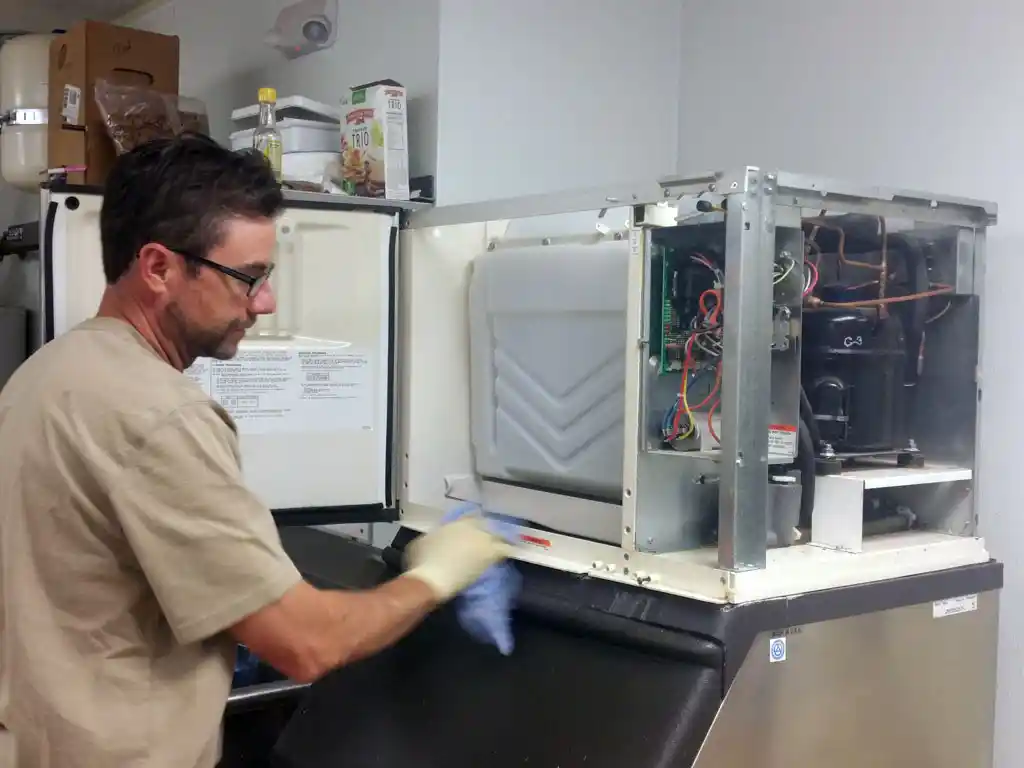
Calibration also includes checking the door gaskets for a proper seal. A faulty gasket allows warm air to enter the cabinet. Additionally, the technician monitors the compressor and refrigerant pressure to confirm normal operation.
Expect the initial cool-down period to take several hours for larger units. Meanwhile, your technician documents baseline readings for future reference. These records are valuable for your preventive maintenance plan going forward.
Step 5: Final Walkthrough and Staff Training
Finally, your technician walks you through the unit’s controls, alarm settings, and maintenance requirements. This is the right time to ask questions about daily cleaning, temperature logging, and when to call for service. Your team should understand how to use the equipment correctly from day one.
On the other hand, skipping this step is a common mistake. Staff who are unfamiliar with equipment settings may accidentally adjust controls or ignore warning alerts. Therefore, the walkthrough is an essential part of any professional installation.
How to Prepare Your Business for Installation Day
A little preparation on your end goes a long way. Here are practical steps you can take before your technician arrives.
- Clear the installation area: Remove any existing equipment, shelving, or inventory from the space at least two hours before the scheduled arrival.
- Confirm electrical readiness: Verify that the correct circuit is available and labeled. Share your electrical panel location with the technician in advance.
- Plan for access: Make sure there is a clear path from the delivery entrance to the installation area. Measure doorways and hallways if needed.
- Notify your staff: Let your team know that the area will be off-limits during installation. This keeps everyone safe and the job moving smoothly.
- Have your building contact available: For commercial properties in business districts like the Minden-Gardnerville area or north Carson City, having a facility manager on-site can speed things up significantly.
Common Challenges During Commercial Refrigerator Installation
Even well-planned installations can run into unexpected issues. Knowing the most common challenges helps you stay calm and respond quickly.
Inadequate Electrical Infrastructure
Many older commercial buildings in Nevada were not built with today’s high-capacity refrigeration equipment in mind. As a result, electrical panels may need upgrades before installation can proceed. Your technician will identify this during the site assessment.
However, if this issue surfaces on installation day, it can cause delays. Therefore, scheduling a pre-installation consultation is strongly recommended. This is especially relevant for businesses in historic commercial areas of Carson City or older strip centers throughout the region.
Ventilation and Airflow Restrictions
Commercial refrigeration equipment generates heat during normal operation. Furthermore, inadequate ventilation causes the unit to work harder, which raises energy costs and shortens equipment life. Your technician will check clearance requirements and recommend solutions if airflow is restricted.
Tight or Unusual Floor Plans
Restaurants and small grocery stores in areas like Dayton, Minden, and South Carson City often have compact kitchens or storage rooms. In addition, some spaces have low ceilings or awkward doorways. Your technician accounts for these conditions during positioning and may need to partially disassemble packaging to maneuver the unit into place.
Maintenance Tips After Your Installation Is Complete
Your refrigerator installation is just the beginning. Ongoing maintenance keeps your unit running efficiently and extends its lifespan. Here are a few habits to start right away.
- Clean condenser coils regularly: Dust and grease buildup on condenser coils reduces efficiency. Cleaning them on a scheduled basis is one of the most effective ways to prevent breakdowns.
- Inspect door gaskets monthly: A worn or cracked gasket allows warm air infiltration. Catching this early prevents compressor strain and product loss.
- Log temperatures daily: Keep a simple temperature log near your unit. This helps you spot performance issues before they become failures.
- Schedule preventive maintenance: A professional inspection at least twice per year catches small issues before they escalate. This is especially important heading into Nevada’s hottest summer months and coldest winter nights.
Talk with an HVAC and refrigeration expert at Buffos to set up a preventive maintenance plan that fits your business schedule and budget.
Frequently Asked Questions About Commercial Refrigerator Installation
How long does a commercial refrigerator installation typically take?
Most standard commercial refrigerator installations take anywhere from a few hours to a full day. The timeline depends on unit size, site readiness, and whether any electrical or plumbing work is needed. Your technician will give you a realistic estimate after the site assessment.
Do I need a permit for commercial refrigerator installation in Nevada?
In many cases, yes. Electrical work and refrigerant handling often require permits and licensed contractors in Nevada. Your technician will advise you on local requirements specific to Carson City, Gardnerville, or Reno. Always work with a licensed commercial refrigeration contractor to stay compliant.
Can I install a commercial refrigerator myself?
This is not recommended. Commercial refrigeration systems involve electrical connections, refrigerant handling, and precise calibration. Furthermore, improper installation can void your warranty and create safety hazards. A licensed technician ensures the job meets code and manufacturer standards.
What should I do if my new unit is not cooling properly after installation?
First, allow adequate time for the initial cool-down period. However, if the unit is still not reaching its target temperature after several hours, contact your technician immediately. It may indicate a refrigerant issue, a wiring problem, or a faulty component that needs prompt attention.
How do I choose the right commercial refrigerator for my business?
Consider your volume needs, available space, and energy efficiency ratings. Additionally, think about your specific application — display cases, reach-ins, and prep table units all serve different purposes. An experienced technician can help you evaluate your options and choose the right equipment for your operation.
Trust the Buffos Team for Your Commercial Refrigerator Installation
At Buffos Commercial Refrigeration & HVAC Services, we understand that your refrigeration equipment is critical to your daily operations. Whether you serve customers in Reno, Carson City, Gardnerville, or the surrounding communities, we bring the same level of care and expertise to every installation.
Our technicians work with equipment from all major manufacturers. Moreover, we provide honest recommendations, thorough site preparation, and reliable follow-through on every job. We want your new equipment running correctly from the moment we power it up.
Ready to move forward with your installation? Contact our team today to schedule your site assessment and get your project started the right way.