
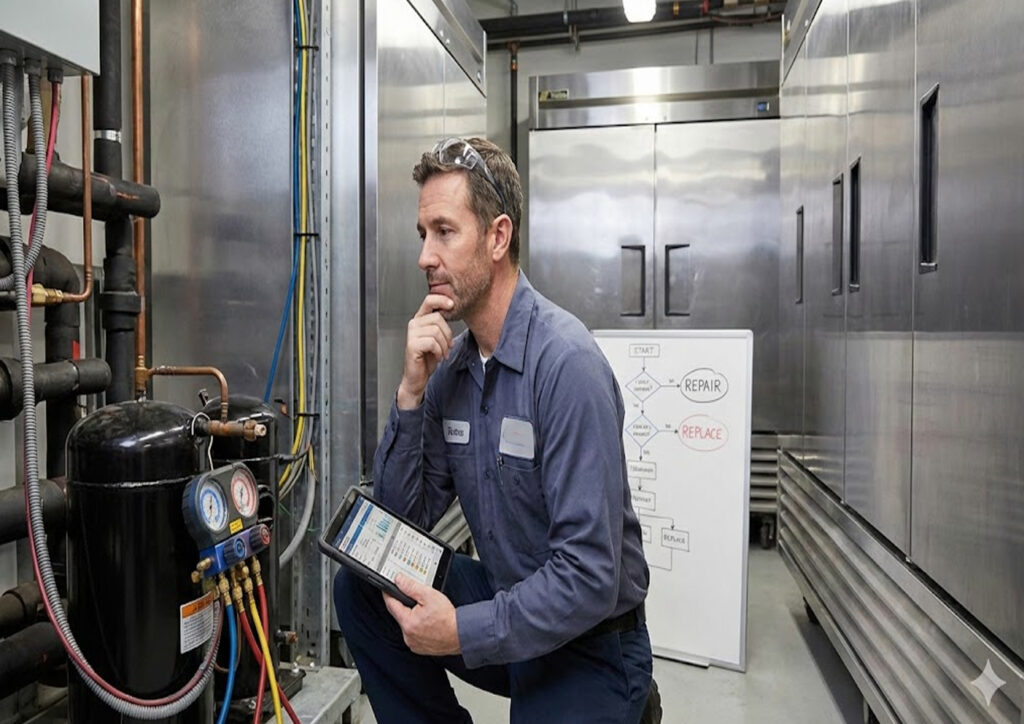
When your commercial refrigeration system starts losing cooling performance, one of the first questions many business owners ask is: “Do I need to recharge the refrigerant—or replace it altogether?”
Understanding the difference between these two options is essential for keeping your system efficient, preventing costly damage, and maintaining food safety.
At Buffo’s Refrigeration, we help Nevada businesses make informed decisions about when to recharge refrigerant, when to replace it, and how to prevent future issues altogether.
The Role of Refrigerant in Cooling
Refrigerant is the chemical compound that absorbs and releases heat to maintain cold temperatures inside your cooler or freezer. Without it, the system can’t remove heat from the air, making it impossible to keep food and beverages at safe temperatures.
However, unlike oil or fuel, refrigerant doesn’t get “used up.” If your system is low on refrigerant, it means there’s a leak somewhere in the lines or components that needs attention.
When to Recharge Refrigerant
A refrigerant recharge involves adding more refrigerant to your system to restore proper pressure levels and cooling capacity. Recharging is appropriate only when:
- The system has a small leak that’s been located and repaired.
- Routine maintenance reveals slightly low refrigerant levels due to minor seepage.
- System performance declines but no major damage is present.
Once leaks are fixed, recharging restores the correct refrigerant balance so the system can operate efficiently again.
Signs Your System Might Need a Recharge
- Cooling temperatures are higher than normal.
- Ice or frost forms on evaporator coils or suction lines.
- The system runs constantly without reaching the target temperature.
- You hear hissing or bubbling noises near refrigerant lines.
If you notice these symptoms, contact a certified commercial refrigeration technician. They can test pressures, locate leaks, and determine if recharging is appropriate.
When to Replace Refrigerant
Refrigerant replacement becomes necessary in situations where the existing refrigerant is no longer suitable or legal for use—or when system contamination makes recharging impossible.
Common Reasons for Replacement
- Phase-out of older refrigerants: Certain refrigerants, such as R22 and R404A, are being phased out due to environmental regulations. Upgrading to low-GWP alternatives like R448A or R290 may be required.
- Severe contamination: If air, moisture, or other gases enter the system, they can degrade refrigerant performance and corrode components. Contaminated refrigerant must be completely removed and replaced.
- Compressor burnout: A failed compressor can release acid and debris into the system, contaminating the refrigerant. In these cases, full replacement is safer and more effective.
- System retrofit or upgrade: When upgrading to a new refrigeration system, switching refrigerants may improve efficiency and regulatory compliance.
Refrigerant replacement is a more extensive process but can lead to better long-term performance, lower energy costs, and compliance with environmental standards.
The Dangers of Recharging Without Repair
Simply topping off refrigerant without repairing the leak is only a temporary fix—and it can lead to bigger problems later.
Leaking systems waste refrigerant, increase compressor wear, and contribute to higher energy bills. Additionally, releasing refrigerant into the atmosphere is illegal under EPA regulations and can result in fines.
At Buffo’s Refrigeration, we always locate and repair the source of a leak before refilling the system to ensure lasting, compliant results.
How Professionals Diagnose the Problem
When you call a professional refrigeration technician, they will:
- Inspect the system for visible signs of leaks or damage.
- Use electronic or nitrogen leak detection tools to pinpoint hidden leaks.
- Measure system pressures and superheat levels.
- Evaluate whether recharging, replacing, or retrofitting is the best solution.
- Recharge or replace refrigerant using the correct quantity and type for your system.
This process ensures your refrigeration unit runs safely, efficiently, and in full compliance with environmental guidelines.
Preventing Future Refrigerant Issues
Regular preventative maintenance is the best way to prevent refrigerant loss or contamination. Routine service includes:
- Cleaning condenser and evaporator coils.
- Checking pressures and refrigerant charge.
- Inspecting for leaks and tightening fittings.
- Replacing filter-driers and seals as needed.
Proactive maintenance extends equipment life, lowers energy costs, and helps avoid emergency repairs.
Partner with Buffo’s Refrigeration for Expert Refrigerant Service
For more than 20 years, Buffo’s Refrigeration has provided expert service and maintenance for walk-in coolers, walk-in freezers, and commercial refrigeration systems throughout Nevada. Our certified technicians specialize in leak detection, refrigerant recharging, and system retrofits using modern, environmentally friendly refrigerants.
Schedule Service Today
If your refrigeration system isn’t cooling properly, don’t wait for a complete failure. Contact Buffo’s Refrigeration today to schedule a refrigerant inspection or request a free consultation. We proudly serve Nevada and nearby areas with professional, reliable commercial refrigeration solutions.
📞Call Us For A Free Quote 775-782-8204 | Buffos-Refrigeration.com